MERV 8 vs 11 vs 13 for a 14x28x1 Filter
TL;DR
A 14x28x1 filter gives you 371.25 square inches of actual media, not the 392 its label implies. Divide your system airflow by 2.58 to get face velocity in feet per minute. Under 400 FPM, MERV 13 is safe in this size. Over 500, your return is undersized and no MERV rating fixes that.
The Short Answer
Which MERV belongs in a 14x28x1 depends on a number most people never measure. Face velocity is your system airflow divided by your filter area, and it decides how hard your blower works far more than the rating on the box does. On a single 14x28x1 return, MERV 13 is comfortable to about 2 tons, marginal at 3, and wrong above 3.5.
Key Takeaways
- The label says 392 square inches. The filter measures 13.5 by 27.5 inches, which is 371.25.
- Face velocity equals airflow in CFM divided by 2.58 square feet for this size.
- The Department of Energy caps residential face velocity at 500 FPM and prefers 200 to 400.
- Two returns split the airflow, which roughly halves your face velocity and changes the answer entirely.
- A MERV 13 changed on schedule can breathe easier than a MERV 8 left in for six months.
How Much Filter Area Does a 14x28x1 Actually Give You?
A 14x28x1 air filter is nominally 392 square inches of face area. The actual cut size is 13.5 by 27.5 inches, or 371.25 square inches, which is 5 percent less, and one of the few manufacturers that publishes the actual cut dimensions for this size prints both figures on the listing. Run your math on the smaller number. At 1,200 cubic feet per minute, the airflow a 3-ton system is designed to move, a single filter this size sees 465 feet per minute, above the 200 to 400 the Department of Energy Building America program lists as preferred and closing on its 500 maximum.
Size on 392 and you hand yourself about 58 CFM of margin that does not exist. That is roughly a sixth of a ton of imaginary headroom, and it is why so many one-inch MERV 13 upgrades disappoint.
How Do I Calculate My Own Face Velocity?
Divide your system airflow in CFM by 2.58, the actual square footage of a 14x28x1. The answer is your face velocity in feet per minute. Under 400 you have room for MERV 13. Between 400 and 500, measure static pressure before you commit. Over 500, the return itself is the problem.
Three Ways to Find Your CFM
- Read the air handler nameplate or the blower table inside the access panel. This is the real number and it beats every estimate.
- Look your model up free in the AHRI Directory, which gives the certified rated capacity for your specific indoor and outdoor combination.
- Estimate from the model number. Most residential condensers carry cooling capacity in the model string as BTU per hour in hundreds, so 036 means 36,000 BTU, which is 3 tons, which is about 1,200 CFM at the federal figure of 400 CFM per rated ton. Treat this as an estimate only. Not every manufacturer follows the convention, and a mismatched indoor coil changes the real answer.
Count Your Returns Before You Trust That Number
Every threshold above assumes one return. If your house has two, each filter sees roughly half the airflow and the arithmetic changes completely. I have not seen another air filter guide raise this, and it is the single most common reason people get the wrong answer.
- One 14x28x1 on a 3-ton system: 465 FPM. Two of them: 233 FPM.
- On two returns this size, MERV 13 stays comfortable to about 4 tons, where you are still only at 310 FPM.
- To find them, walk the house and hold a tissue to each grille. If it sticks, that is a return, and a filter usually sits behind it.
Divide your total CFM by the number of returns before you calculate. If they are different sizes, split the airflow in proportion to their areas rather than evenly.
Will MERV 13 Restrict Airflow in a 14x28x1?
Only if your face velocity is already high. Resistance is not a fixed property of a MERV rating, it is a function of how fast air is forced through the media.
The Department of Energy measured the same 4-inch MERV 12 filter at 0.20 inches of water column at 300 FPM and 0.35 inches at 500 FPM. Identical filter, 75 percent more resistance, from speed alone. That agency also recommends checking with your HVAC service company before stepping up to MERV 13.
How to Measure 14x28x1 Static Pressure
A technician puts a manometer on the supply side and the return side, each referenced to room pressure, then adds the two readings. Total external static pressure should come in at or below 0.5 inches of water column. It takes minutes and it settles the question better than any rule of thumb, mine included.
MERV 8 vs. 11 vs. 13: What Each Step Actually Buys
The real difference sits in fine particles. The EPA rates MERV 11 at 20 percent or better and MERV 13 at 50 percent or better on particles from 0.30 to 1.0 micron, which is at least two and a half times the capture in the range where smoke, bacteria and fine allergen fragments live.
- On coarse 3.0 to 10.0 micron dust and pollen, MERV 11 already reaches 85 percent and MERV 13 reaches 90.
- MERV 8 captures 70 percent or better on coarse particles and is not rated at all in the finest range.
I part company with the usual advice to buy the highest MERV you can find. On the dust and pollen most people are chasing, MERV 11 is already doing the work. The jump to 13 buys fine particles, and fine particles matter to a specific household: allergies, asthma, smoke. If that is not your house, spend the airflow elsewhere.
What to Do If Your Number Comes Out Too High
Work through these in order, cheapest and least disruptive first.
1. Drop to MERV 11. Free and immediate. You keep 85 percent of coarse capture.
2. Shorten the interval. Swap a MERV 13 at 45 days rather than 90 and it spends its life much nearer the clean pressure drop it was rated at.
3. Add media depth. If the slot takes a 2-inch or 4-inch filter, deeper pleats give more media area at the same face size and lower resistance at the same MERV.
4. Add or enlarge a return. The real fix and the expensive one. It halves your face velocity permanently.
What I would not do is leave a restrictive filter in a system already over 500 FPM and hope. Blower motors and evaporator coils are what get damaged, and either repair runs well past the cost of options one through four.
The Variable That Matters More Than Your MERV Choice
Every pressure-drop figure published for a filter is measured clean. The Department of Energy notes that accumulated dirt can greatly increase resistance, so that number describes the filter on the day you install it and no day after.
So a MERV 13 changed on schedule can sit easier on your blower than a MERV 8 left in six months. The box describes day one. Your habit describes the other 89. I would rather see a MERV 11 someone keeps up with than a MERV 13 they forget about.
The Pattern I See Most Often
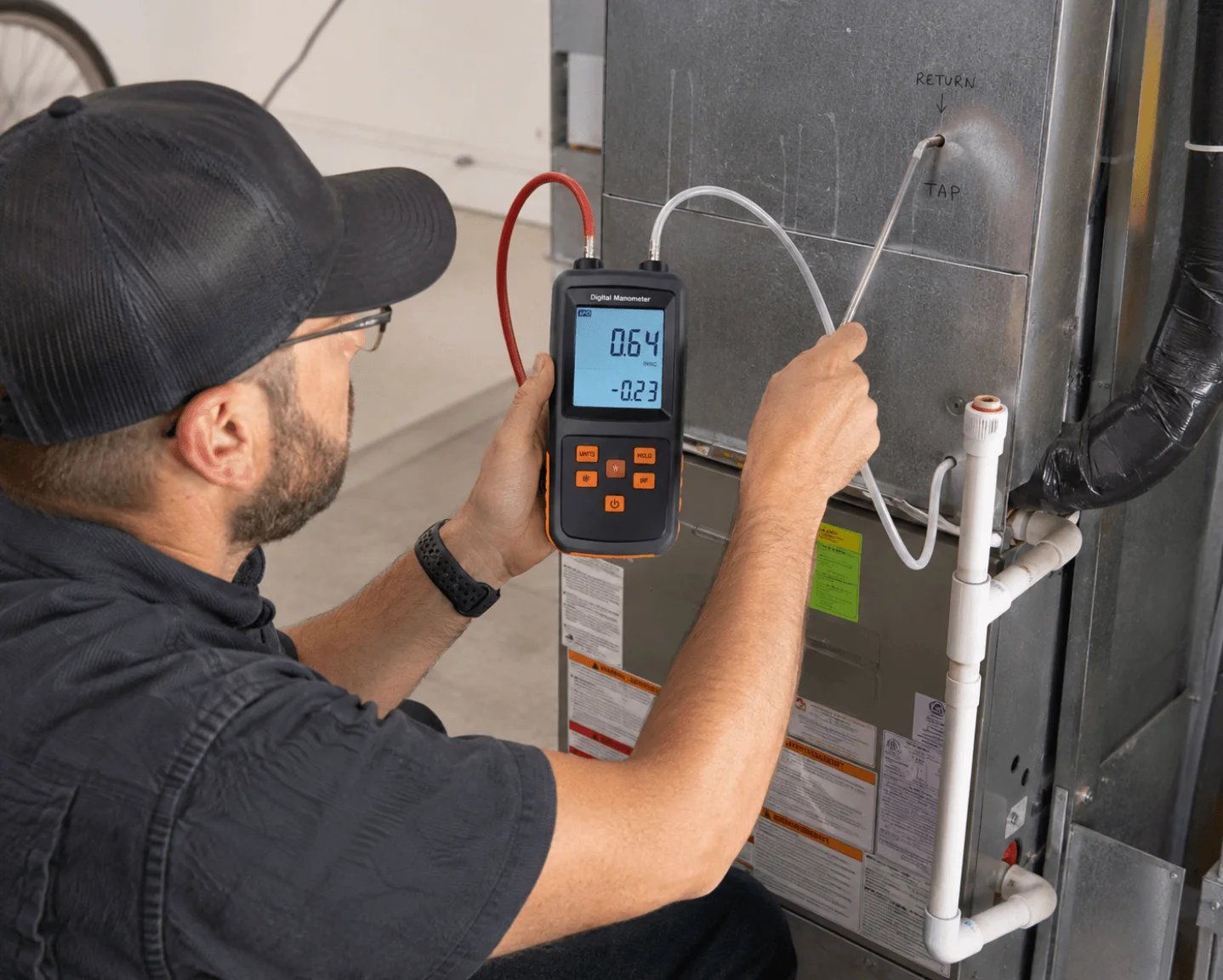
"The call I get wrong least often is the one where somebody has already put a MERV 13 in a one-inch slot on a three-ton system with a single 14x28 return and cannot work out why the return grille has started whistling. Nothing is broken. The filter is moving air faster than the media was built for. Drop to MERV 11 and the symptom goes with it." — Dán Mcaloon
Essential Resources
- DOE, High-MERV Filters: the face-velocity ceilings and static pressure limits behind every number here.
- DOE, Compact Air Distribution: why filter grilles must be sized for the highest MERV you will run.
- DOE, Replace Air Filter at a Return Grille: measure actual dimensions, and tape the perimeter to stop bypass.
- EPA, What is a MERV Rating?: capture efficiency for every rating, broken out by particle size.
- EPA, Guide to Air Cleaners in the Home: why FPR and MPR are proprietary while MERV is a consensus standard.
- ENERGY STAR, Heat and Cool Efficiently: check the filter monthly through heavy months, not every 90 days.
- American Lung Association, Air Cleaning: the allergy-specific case for MERV 13, plus the white-paper test for a dirty filter.
Supporting Statistics
- Speed alone raises resistance 75 percent. The same 4-inch MERV 12 filter reads 0.20 in. w.c. at 300 FPM and 0.35 at 500. (DOE Building America Solution Center)
- Your entire system gets 0.50 inches. Conventional ducted systems are rated at a minimum 0.50 in. w.c. external static pressure at no more than 400 CFM per rated ton, and the filter alone takes 20 to 50 percent of that budget. (ENERGY STAR, DOE)
MERV 13 captures at least 2.5 times the fine particles of MERV 11, at 50 percent or better against 20 percent or better on 0.30 to 1.0 micron. (EPA)
Where I Land on the 14x28x1
- Up to 2 tons, roughly 800 CFM, a one-inch MERV 13 is comfortable. You are near 310 FPM.
- At 2.5 tons, 388 FPM. Workable, but measure static pressure first.
- At 3 tons you are at 465 FPM. This is where I stop arguing for MERV 13 in a one-inch slot.
- At 3.5 tons and up, past 500 FPM. The return is undersized. No MERV rating fixes that.
I could be wrong about the 2.5-ton line for your specific equipment. A manometer settles it.
Frequently Asked Questions
Is MERV 13 Too Restrictive for a 1 Inch Filter?
Not by itself. In a 14x28x1 it is fine below about 1,030 CFM on a single return. Above that the one-inch depth stops being the right format.
What Is the Best MERV Rating for a 14x28x1?
MERV 11 for most homes. MERV 13 if someone has allergies or asthma and your face velocity is under 400 FPM.
Why Does My Return Whistle After a Filter Upgrade?
Usually face velocity, not a fault. Air moving faster than the media was built for makes noise at the grille. Dropping one MERV step often ends it.
Does a 4-Inch Filter Really Have Less Resistance Than a 1-Inch?
Yes, at the same rating. Deeper pleats hold more media area, so the same air passes through more surface at a lower speed.
Measure Before You Buy
Find your system airflow, divide it by 2.58, and let that number choose your MERV rating instead of the marketing on the box. Two minutes of arithmetic protects a blower motor that costs a great deal more.
Glossary
- Face velocity: the speed of air through the filter media, in feet per minute. Airflow divided by filter area.
- Nominal vs. actual size: nominal is the rounded label, 14x28x1. Actual is what you measure, 13.5 by 27.5.
- Pressure drop: resistance a filter adds, in inches of water column. Published figures are measured clean.
- Total external static pressure: the combined supply and return pressure your blower works against. Residential systems are designed for 0.5 inches or less.
- MERV: Minimum Efficiency Reporting Value, a consensus standard rating particle capture from 0.3 to 10 microns.
- PSC and ECM blowers: a PSC motor loses airflow as pressure rises. An ECM keeps pushing and can burn out instead.
Learn more about HVAC Care from one of our HVAC solutions branches…
Filterbuy HVAC Solutions - Miami FL - Air Conditioning Service
1300 S Miami Ave Apt 4806 Miami FL 33130
(305) 306-5027
https://maps.app.goo.gl/Ci1vrL596LhvXKU79