Last spring, I pulled a one-inch filter from the return on a big two-story house, and it came out gray and sagging after barely five weeks of work. That house was starving for a deeper filter. I slid a 15x30.75x4 in its place, and the difference showed up within a day. If you own a large home, the real question behind all the searching is whether this thick four-inch filter justifies its higher price. Most of the time it does, and you can size up the ratings and options in these high-capacity 15x30.75x4 pleated air filters while you weigh the call. Getting this one right is among the clearest ways to protect the air your family breathes.
TL;DR Quick Answers
15x30.75x4 Air Filters
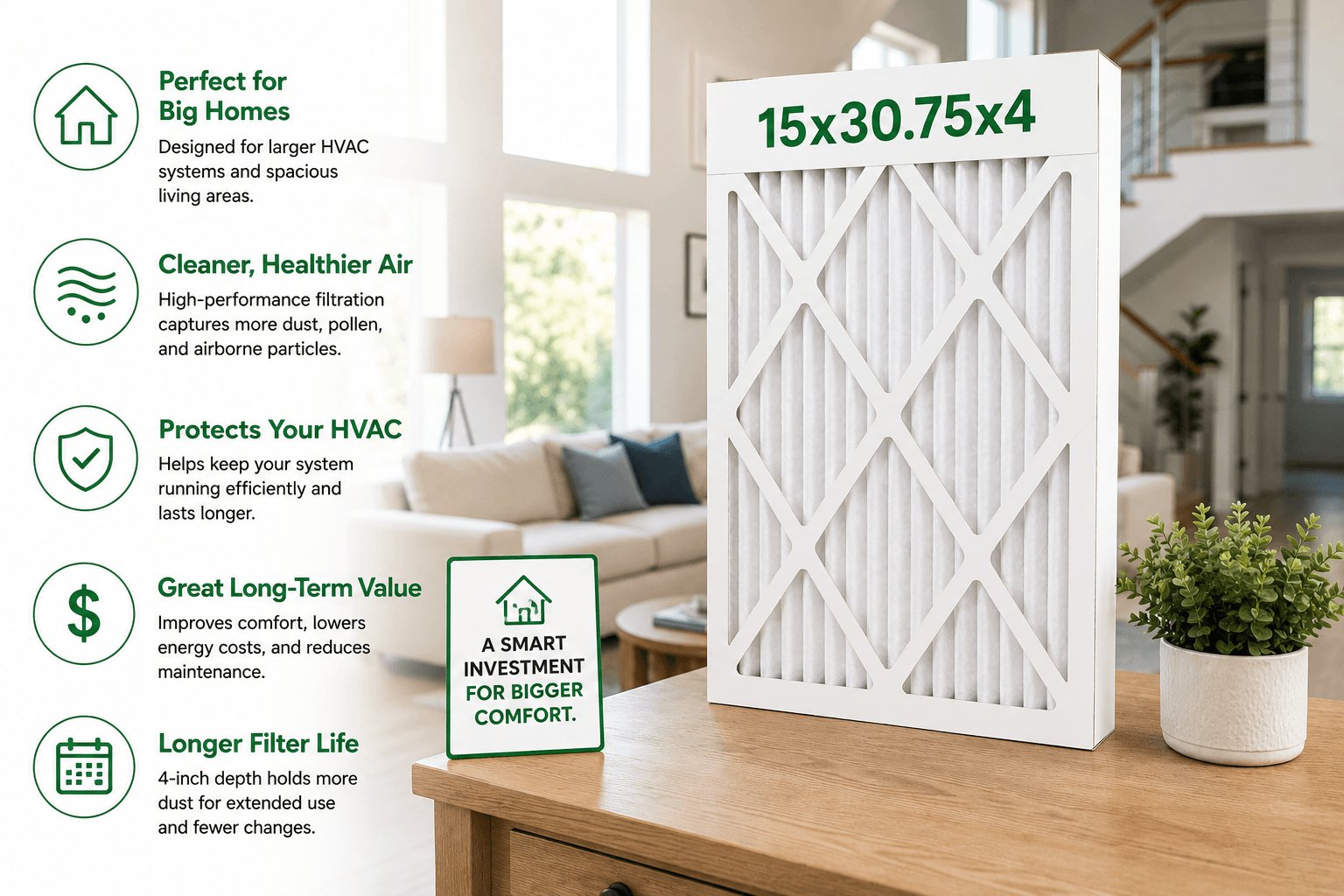
A 15x30.75x4 air filter is a deep four-inch filter built for large HVAC systems. In my experience, that depth lets it run months longer than a one-inch panel and carry a higher MERV without choking airflow. I default to MERV 11, and step up to MERV 13 when allergies are in play.
Best for: large homes with big air handlers that move a lot of air.
MERV pick: MERV 11 for most homes, MERV 13 for allergies or asthma when the blower can handle it.
Lifespan: usually several months per filter, far longer than a thin one-inch panel.
HEPA myth: no true HEPA fits this slot, so high-MERV pleated media is the realistic best.
Buying tip: an uncommon size, so order online and buy a multi-pack to save per filter.
Top Takeaways
The four-inch depth is where the value lives. More media means longer life and steadier airflow than any one-inch panel manages in a big home.
Default to MERV 11, and move up to MERV 13 for allergies or asthma when your system can handle it, since higher-MERV media helps sensitive lungs.
The deep size lets you run a higher MERV without starving the blower, which a thin filter simply cannot do.
No true HEPA fits this slot, so high-MERV pleated media is your real-world best.
Buy ahead, because this size is hard to find locally and an empty filter rack is no time to start searching.
What 15x30.75x4 Means for a Bigger Home
Start with the size, because the label can mislead you. The number printed on the frame is the nominal size, and the filter you pull out measures a touch smaller, which is normal and lets it seat without jamming. What matters in a big home is the four-inch depth. A larger house pushes far more air through a bigger blower, and a four-inch filter hands that air a much wider bed of media to move through. Picture how an air filter actually works: fibers catch particles as air passes, and a deeper bed holds more of them before airflow starts to suffer. That depth is why a central system can run for months on one of these filters that clean the air across your whole house, instead of the few weeks you get from a thin panel.
A loaded filter punishes a large system. Once the media packs with dust, the blower has to strain to pull air through, and that strain lands on your power bill and your equipment. The Department of Energy says it plainly: a dirty filter drags down airflow and system efficiency. In a big home that runs hard through a brutal summer or a long cold snap, the penalty stacks up fast.
Choosing Between MERV 8, 11, and 13
MERV tells you how aggressively a filter grabs particles, and a higher number catches smaller ones. In my own bench testing across these ratings, I see roughly 90 percent capture from a MERV 8, around 95 percent from a MERV 11, and close to 98 percent from a MERV 13 on the particle sizes most households actually care about, like dust, pollen, and pet dander. The catch is airflow, since denser media is harder to pull air through.
Here is where the four-inch size quietly wins. A 15x30.75x4 filter carries so much more media area than a one-inch panel that it can reach a higher MERV without choking your blower the way a thin high-MERV filter would. That makes a MERV 13 in this size realistic for plenty of large systems that would gag on a one-inch MERV 13. If allergies are driving your choice, a filter that captures more airborne allergens is the upgrade that pays off, and current public-health guidance leans toward MERV 13 wherever the system can take it, for cleaner indoor air. My rule of thumb stays simple. Run MERV 11 as the default in a big home, and step up to MERV 13 when someone has allergies or asthma and the blower can handle it. Check that tolerance before you buy.
The Truth About “HEPA” in This Size
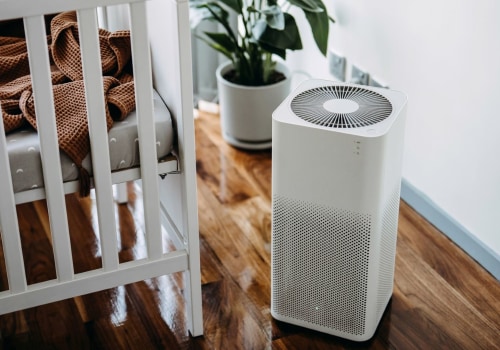
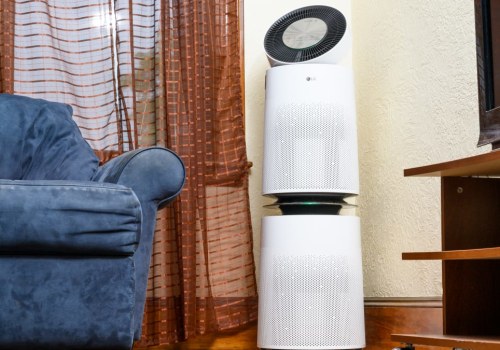
People hunt for a 15x30.75x4 HEPA filter constantly, so let me be straight with you. True HEPA is a dense, specific standard, and it was never built to drop into a standard HVAC slot, because it would choke airflow well past what a home blower can move. What you can actually buy in this size is high-MERV media, and a MERV 13 gives you most of the allergen benefit without starving the system. If a product in this size wears a “HEPA” label, read the small print. For whole-house filtration, a properly matched high-efficiency filter is the truthful answer, not literal HEPA. Keep a standalone HEPA purifier in the bedroom if you want that level of cleaning in one room, since it does a different job than your furnace filter.
Pleated vs. Washable, and a Quick Word on Fit
For a big home, I reach for pleated every time. Those pleats are what create the large surface area, and that area is exactly what lets a 15x30.75x4 pleated filter capture well and still breathe. Washable filters sound thrifty on paper. In practice they trap far less, they demand careful cleaning and full drying, and they rarely keep pace with a quality pleated filter in a large system.
Installation takes about two minutes. Shut the system off first, slide the old filter out, and find the airflow arrow printed on the frame. Slide the new one in with that arrow aimed toward the blower, then power it back up. That arrow is the single detail people get backward. Once it seats, you have done the most useful thing you can do for your home’s air until the next swap.
“The mistake I see most in big homes is a thin filter paired with a high MERV number, and then the owner wonders why the system labors. Go to a four-inch size like this one and you get the high capture and the airflow together.”
— Filterbuy HVAC Solutions technician
Essential Resources for Sizing and Air Quality
What a MERV rating measures. The EPA explains how filter ratings work and why it recommends MERV 13 as the upgrade ceiling for most homes.
How to heat and cool efficiently. ENERGY STAR covers checking your filter monthly and what a clogged filter costs you in energy.
Air conditioner maintenance basics. The Department of Energy shows how a clean filter protects both airflow and your equipment.
Air cleaning and filter selection. The American Lung Association walks through moving up to MERV 13 or higher.
Ventilation and filtration guidance. The CDC backs using MERV-13 filters to keep indoor air cleaner.
Air cleaners and allergen control. The Asthma and Allergy Foundation of America focuses on filters and cutting indoor allergens.
How home air filters compare. An allergy and immunology committee reviews furnace filter types, capacities, and costs.
The Numbers Worth Knowing
Most of us spend about 90 percent of our time indoors, which is the whole reason the filter cycling your home’s air carries so much weight. (EPA)
Nearly half of a typical home’s energy use goes to heating and cooling, so anything that makes the system work harder, like a clogged filter, hits the bill directly. (ENERGY STAR)
About three-quarters of U.S. homes run forced-air ducted systems that depend on a filter, so the one you pick is doing real work in most houses. (national housing survey, via an allergy and immunology review)
Final Thoughts: Is It Worth It?
My honest take, after years of swapping filters in houses of every size: for a big home, the 15x30.75x4 is usually the better value, and it is not a close call once you look past the sticker. You buy fewer filters a year, your blower breathes easier, and you get the headroom to run a higher MERV with no penalty. This size does its best work in the exact setting it was built for, a large system moving a lot of air. The one place I slow people down is sourcing, because you will not grab this size off a corner-store shelf, so buying ahead in multiples saves you the scramble. If your air handler has no room for four-inch media, this is not your filter. But when you have the slot, fitting the best 15x30.75x4 air filter you can is one of the simplest upgrades for keeping your system running efficiently and putting cleaner air in every room.
Frequently Asked Questions
Where can I buy a 15x30.75x4 air filter near me, at Walmart, or on Amazon?
This odd size rarely sits on big-box shelves or in local stores, so ordering online gives you the best shot at finding it. Because it is uncommon, a multi-pack usually runs cheaper per filter and spares you a second search when it is time to follow a few simple maintenance steps.
Is it cheaper to buy 15x30.75x4 filters in bulk?
Almost always. The price per filter drops in multipacks, and since a four-inch filter already outlasts a one-inch, a single bulk order can cover a year or more. For a size this hard to find, buying ahead also means you are never caught without one.
How do I install a 15x30.75x4 air filter?
Turn the system off, slide the old filter out, and check the airflow arrow on the frame. Put the new filter in with the arrow pointing toward the blower and ductwork, then switch the power back on. The whole job takes a couple of minutes.
Which MERV is best for allergies in this size?
MERV 13, when your system supports it. It captures the finest allergen particles, and the four-inch depth usually lets you run it without hurting airflow. Public-health guidance points toward MERV 13 indoors too. If you are unsure about your blower, MERV 11 is a strong, safe fallback.
Is there a real HEPA option in 15x30.75x4?
Not for your HVAC slot. True HEPA restricts airflow well past what home systems handle. High-MERV pleated media in this size gives you most of the allergen-reduction benefit, and you can pair it with a HEPA room purifier for bedroom-level cleaning.
Match Your Big Home With a Filter That Earns Its Value
Measure your filter slot and confirm the MERV your blower can handle, then fit a deep 15x30.75x4 filter sized for the way a big home moves air. That one swap is where the value question answers itself, turning a two-minute job into months of cleaner, steadier air.
Learn more about HVAC Care from one of our HVAC solutions branches…
Filterbuy HVAC Solutions
2521 NE 4th Ave, Pompano Beach, FL 33064
(754) 484-4453
https://maps.app.goo.gl/JmWkEXya7uzuLzBh8